
Designed for Grocery Environments
Sanitation built specifically for fresh food retail, not adapted from janitorial cleaning.
Where We Are Today
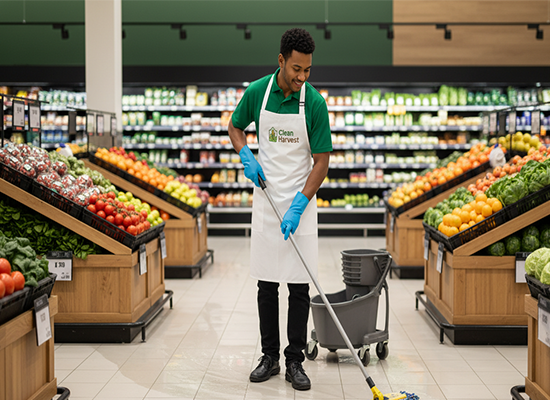
Clean Harvest is purpose-built for grocery environments where fresh food, refrigeration, and food-contact surfaces coexist with active customer traffic and daily operations.
Produce departments, refrigerated cases, wet walls, and display fixtures require sanitation approaches that protect food safety while maintaining temperature stability, airflow, and presentation standards. Generic cleaning models do not account for these conditions.
Our framework is designed around how grocery stores actually operate.
Produce departments, refrigerated cases, wet walls, and display fixtures require sanitation approaches that protect food safety while maintaining temperature stability, airflow, and presentation standards. Generic cleaning models do not account for these conditions.
Our framework is designed around how grocery stores actually operate.
What Makes Grocery Different
- Food-contact and food-adjacent surfaces
- Refrigerated and moisture-rich environments
- Open displays with customer interaction
- Regulatory oversight and inspection requirements
- Shrink, spoilage, and shelf-life sensitivity
Clean Harvest accounts for these factors in how sanitation is planned, scheduled, and executed.
What the Data Shows
Retail Food Environments Require Specialized Sanitation
The FDA Food Code establishes sanitation and food-contact surface requirements for retail food establishments, outlining practices designed to prevent contamination and protect consumers in grocery environments.
.png)
Environmental Conditions Impact Food Safety
Temperature, moisture, and surface conditions directly affect food quality and safety in retail environments.
How the Framework Evolves
The Clean Harvest framework is designed to support standardized execution today and expanded verification, documentation, and reporting capabilities as grocery operations mature.

+1 855-4-HARVST
+1 855-442-7878
hello@mycleanharvest.com


